 Finding the best air pistol for target shooting comes down to one thing: how consistently it puts pellets in the same hole. Power, looks and magazine size matter a lot less than a rifled barrel, a decent trigger and sights you can actually adjust.
I went back through the air pistols that target shooters actually use in 2026, cut the BB replicas that look cool but scatter shots, and kept five pellet pistols that cover every budget, from a backyard plinker under $70 to a real 10-meter match pistol.
- Best overall: Crosman 2240
- Best budget: Beeman P17
- Best without CO2: Crosman P1377 American Classic
- Best for 10m competition: Air Venturi V10 Match
- Best premium: Beeman P1
Best Air Pistols for Target Shooting: Comparison Chart
| Air Pistol | Best For | Power | Caliber / Velocity | Price | Link |
|---|---|---|---|---|---|
| Crosman 2240 | Best overall | CO2 (12g) | .22 / up to 460 fps | $ | Check Price |
| Beeman P17 | Best budget | Single-stroke pneumatic | .177 / up to 410 fps | $ | Check Price |
| Crosman P1377 American Classic | Best without CO2 | Multi-pump pneumatic | .177 / up to 600 fps | $ | Check Price |
| Air Venturi V10 Match | 10m competition | Single-stroke pneumatic | .177 / about 400 fps | $$ | Check Price |
| Beeman P1 | Best premium | Spring piston | .177 / 600 fps or .22 / 460 fps | $$$ | Check Price |
Price guide: $ = under $100, $$ = $100 to $400, $$$ = over $400. Prices change often, so check the current price on Amazon.
The 5 Best Air Pistols for Target Shooting in 2026
Every pistol here shoots pellets through a rifled barrel. That is the single biggest accuracy factor at this price range, and it is why none of the smoothbore BB pistols made the cut.
1. Crosman 2240 (Best Overall)

- Caliber: .22
- Power: One 12-gram CO2 cartridge
- Action: Bolt action, single shot
- Velocity: Up to 460 fps
- Barrel: Rifled steel
- Sights: Blade front, adjustable rear
- Weight: About 1.8 lbs
The Crosman 2240 was my top pick back when I first wrote this guide, and it still is. It is cheap, accurate, built in the USA, and it might be the most upgraded air pistol ever made.
Out of the box you get a .22 rifled steel barrel, a bolt action that loads one pellet at a time, and a rear sight you can adjust for windage and elevation. That single-shot bolt is not a weakness for target work. It slows you down and makes you think about every shot.
One CO2 cartridge gives you a few dozen good shots before velocity starts to drop. Put a drop of Pellgunoil on the tip of each new cartridge and the seals will last for years.
The real magic is the aftermarket. Longer barrels, a .177 conversion, better triggers, red dots and even shoulder stocks all bolt on. You can start simple and turn this into a serious tack driver later.
I recommend the 2240 if you want one pistol that is fun on day one and still worth upgrading a year later.
- Rifled .22 barrel is genuinely accurate at 10 meters
- Huge aftermarket for barrels, triggers and sights
- Simple, reliable bolt action
- Made in the USA and very affordable
- Ambidextrous grip
- Stock trigger is heavy and a bit gritty
- CO2 performance drops in cold weather
- You need to keep buying 12-gram cartridges
2. Beeman P17 (Best Budget)
- Caliber: .177
- Power: Single-stroke pneumatic
- Action: Top-lever cocking, single shot
- Velocity: Up to 410 fps
- Barrel: Rifled
- Sights: Fiber optic, adjustable rear
- Mount: 11mm dovetail for a red dot
If you only have about $50 to spend, the Beeman P17 is the pistol I would buy. It is a budget copy of the German-made Beeman P3 (also sold as the Weihrauch HW40), and it shoots far better than its price suggests.
You open the top frame, swing it forward to compress one charge of air, load a pellet and close it. No CO2, no pumping ten times. Every shot gets the same amount of air, which is exactly what you want for consistent groups.
The dovetail on top takes a small red dot, which is a cheap way to make it even easier to shoot well.
The catch is quality control. Some P17s lose their seal and stop building pressure. Buy from a seller with easy returns, and know that reseal kits are cheap if it ever happens after the return window.
- Excellent accuracy for the money
- Single-stroke means no CO2 cost and consistent shots
- Recoilless, quiet and easy to shoot well
- Dovetail for a red dot
- Quality control is hit or miss
- Mostly plastic build
- Cocking effort can tire smaller hands
3. Crosman P1377 American Classic (Best Without CO2)
- Caliber: .177
- Power: Multi-pump pneumatic (3 to 10 pumps)
- Action: Bolt action, single shot
- Velocity: Up to 600 fps at 10 pumps
- Barrel: Rifled steel
- Sights: Blade front, adjustable rear
- Length: About 13.6 inches
The American Classic has been around since the late 1990s, and Crosman still makes it. It runs on your arm instead of CO2, so you never run out of gas in the middle of a session.
The pump lets you choose your power. Three or four pumps are plenty for paper targets in the backyard. Go to ten when you want to reach out further. For target work, pick one pump count and stick with it so every shot leaves the barrel at the same speed.
Like the 2240, it shares parts with a big upgrade scene, so you can add better sights, a steel breech or a shoulder stock later.
I recommend it to anyone who hates buying CO2 or shoots in cold weather where CO2 pistols struggle.
- No CO2 needed, ever
- Adjustable power by pump count
- Rifled steel barrel
- Works fine in cold weather
- Lots of upgrade parts
- Pumping gets tiring over long sessions
- Long and a bit front heavy
- Pump arm can drop out of its catch
4. Air Venturi V10 Match (Best for 10m Competition)
- Caliber: .177
- Power: Single-stroke pneumatic
- Action: Over-lever, single shot
- Velocity: About 400 fps
- Trigger: Two-stage, fully adjustable
- Grip: Anatomical with adjustable palm shelf
- Weight: 1.95 lbs
If you are thinking about 10-meter air pistol competition, this is where I would start. The V10 used to be sold as the Gamo Compact, and it has filled the entry-level match pistol slot since Daisy discontinued the old Avanti 747.
You get the things real match pistols have: an adjustable two-stage trigger, adjustable sights and a target grip with a palm shelf you can set for your hand. It shoots tiny groups at 10 meters when you do your part.
One pump of the over-lever gives you a full shot. It takes some effort, and over a 60-shot match you will feel it in your arm. There is no safety, so treat it with proper range discipline.
The standard grip is right-handed. Lefties should order the left-hand version or grip.
- True match-grade accuracy at 10 meters
- Adjustable two-stage trigger
- Adjustable grip, sights and palm shelf
- Safe to dry fire for practice
- Recoilless
- Cocking effort adds up over a full match
- No manual safety
- Costs several times more than a 2240
5. Beeman P1 (Best Premium)
- Caliber: .177 or .22
- Power: Spring piston, two power levels
- Action: Over-lever cocking, single shot
- Velocity: Up to 600 fps (.177), 460 fps (.22)
- Trigger: Two-stage adjustable
- Mount: 11mm dovetail
- Weight: 2.5 lbs
The Beeman P1 is made in Germany by Weihrauch (it is the same pistol as the HW45), and a lot of airgunners call it the holy grail of air pistols. It is heavy, solid and shaped like a 1911.
The top frame lever cocks the spring to one of two lock points, so you get a low power setting for quiet indoor practice and a high power setting for longer range.
It is a spring pistol, so it has some movement when it fires. You need a consistent, relaxed hold to get the best groups. Once you learn it, the P1 is accurate, and it will probably outlive you.
I recommend it if you want one heirloom air pistol and do not mind paying for it.
- German build quality that lasts decades
- Two power levels
- Crisp adjustable two-stage trigger
- Available in .177 and .22
- Manual safety
- Expensive
- Spring recoil needs a consistent hold
- Heavier than the others here
- Never dry fire it
How to Choose an Air Pistol for Target Shooting
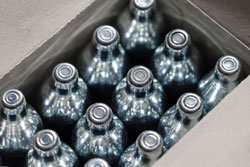 Pellets, not BBs. BB pistols use smoothbore barrels and steel balls. They are fun for plinking cans, but they will not group tightly on paper. For target shooting, buy a pellet pistol with a rifled barrel.
Pick your power source.
- CO2: easy and quick to shoot, but you keep buying cartridges and power drops in the cold.
- Single-stroke pneumatic: one pump per shot, very consistent, and the standard for budget match pistols.
- Multi-pump pneumatic: adjustable power, no gas, but more work per shot.
- Spring piston: self-contained and durable, but you need to learn a steady hold.
- PCP: the most consistent of all, but it needs a hand pump or a tank. This is what Olympic-level shooters use.
Go .177 for paper. The .177 pellet flies flatter, costs less, and it is the caliber used in 10-meter competition. A .22 like the Crosman 2240 is still very accurate and hits harder, which some people like for backyard spinners.
Check the sights and trigger. An adjustable rear sight is a must. A lighter, cleaner trigger makes a bigger difference to your groups than extra velocity ever will.
Do not chase fps. For target shooting at 10 meters, 400 fps is plenty. More speed usually means more noise and more cocking effort, not better groups.
Tips for Using and Maintaining Your Air Pistol

- Use wadcutter pellets on paper. Their flat heads cut clean holes that are easy to score.
- Oil CO2 seals, not barrels. A drop of Pellgunoil on each new CO2 cartridge keeps seals alive. Do not oil the barrel or the inside of a spring pistol unless the manual says so.
- Never dry fire a spring pistol. Many single-stroke pneumatics are fine to dry fire, but check your manual first.
- Store it dry. Keep it out of humid places and wipe metal parts with a light gun oil to stop rust.
- Use a proper pellet trap. Pellets bounce off hard surfaces. Always wear eye protection.
Final Verdict
After going back through the current lineup, I still pick the Crosman 2240 as the best air pistol for target shooting for most people. It is accurate, cheap, made in the USA and endlessly upgradable.
If your budget is tight, grab the Beeman P17. If you want to compete, skip straight to the Air Venturi V10 Match.
Frequently Asked Questions
What is the most accurate air pistol for the money?
For match shooting, the Air Venturi V10 offers real 10-meter accuracy for a few hundred dollars. For casual target practice, the Crosman 2240 and Beeman P17 shoot far better than their price suggests.
Is .177 or .22 better for target shooting?
.177 is the standard for target shooting. It has a flatter trajectory, cheaper pellets, and it is the caliber used in 10-meter competition.
Are BB pistols good for target shooting?
They are fine for casual plinking, but BB pistols have smoothbore barrels, so they cannot match the accuracy of a rifled pellet pistol on paper.
How far should I shoot an air pistol at targets?
Most target practice happens at 10 meters (about 33 feet), the official competition distance. Many air pistols stay accurate out to around 20 or 25 yards with practice.
Do I need a license to own an air pistol?
In most of the US, no federal license is needed. Some states and cities, such as New Jersey and New York City, regulate air guns more strictly, so check your local laws before you buy.
Can I use an air pistol indoors?
Yes, with a proper pellet trap and a safe backstop. A recoilless single-stroke pneumatic like the V10 or P17 is quiet enough for a basement or garage range.
Related Guides
New to air guns? Start with our Air Guns for Beginners guide →